





Smoke detectors are silent guardians in our homes, often overlooked until an emergency strikes. According to fire safety experts, working smoke alarms can reduce the risk of dying in a home fire by half, yet nearly three out of five home fire deaths occur in properties without functional detectors. In 2026, with smart home tech advancing, basic maintenance like testing remains crucial especially using actual smoke to simulate real conditions. Learning how to test a smoke detector with smoke ensures your device responds to genuine threats, not just electronic checks. This method goes beyond the simple button press, verifying sensor sensitivity amid rising concerns over false alarms or failures. Whether you’re a homeowner testing at home or ensuring compliance in rentals, proper techniques prevent tragedies while incorporating tools like smoke detector tester products. This guide provides step-by-step insights, safety tips, and alternatives like how to test smoke detector without test button, empowering you to maintain peace of mind.
Understanding Smoke Detectors and Their Types
Smoke detectors come in two primary types: ionization and photoelectric, each detecting smoke differently. Ionization models excel at sensing fast-flaming fires with small particles, using a tiny radioactive source to ionize air smoke disrupts this, triggering the alarm. Photoelectric versions use light beams; smoke scatters the light onto a sensor, ideal for smoldering fires. Dual-sensor units combine both for comprehensive coverage.
Why does this matter for testing? Ionization detectors might respond quicker to aerosol smoke, while photoelectric need denser particles. Hardwired systems interconnect, so one alarm triggers all; battery-only are simpler but require vigilant battery checks. Knowing your type `check the label guides effective testing, ensuring the device detects smoke as intended.
Why Test Smoke Detectors with Smoke?
Can smoke detectors be tested? Absolutely, and using smoke mimics real scenarios better than the test button, which only verifies electronics and battery, not the sensor’s ability to detect particles. How to know if a smoke detector detects smoke? A smoke test confirms this directly, revealing issues like dust buildup or sensor degradation that button tests miss.
Guidelines from the National Fire Protection Association (NFPA) recommend functional testing annually with smoke, beyond monthly button checks. This is vital because detectors lose sensitivity over time replace every 10 years, but test to catch early failures. In homes with interconnected alarms, smoke testing verifies the whole system activates, potentially saving lives in multi-level houses.
Safety Precautions Before Testing
Before diving into how to test a smoke detector with smoke, prioritize safety. Notify household members to avoid panic false alarms can desensitize people to real threats. Use a step ladder for ceiling-mounted units, ensuring stability to prevent falls.
Avoid open flames; opt for controlled sources like aerosol testers to minimize fire risks. If your detector lacks a hush button, prepare for a loud siren ear protection helps. For interconnected systems, silence one might not quiet all; know your model’s features. Test during daylight to avoid startling neighbors, and never disable alarms post-test.
Step-by-Step: How to Test a Smoke Detector with Smoke at Home
What is the best way to check a smoke detector? While button tests suffice monthly, annual smoke tests provide deeper assurance. Here’s how to test a smoke detector with smoke at home safely.
- Gather Supplies: Use canned aerosol smoke (e.g., CRC Smoke Test or Solo 365) available for $10-30 online. Avoid cigarettes or incense; they might not produce consistent particles.
- Position Yourself: Stand on a stable ladder, arm’s length from the detector.
- Activate Test Mode (If Available): Some models have a test/hush button; press to enter test mode.
- Introduce Smoke: Spray aerosol toward vents for 2-3 seconds alarm should sound within 10-20 seconds. If no response, retest; failure means replacement.
- Silence and Reset: Use hush button or fan air to clear smoke; alarm resets automatically.
- Document: Note date in a log for compliance.
This method confirms sensor functionality without real fire hazards.
How to Test a Smoke Detector with Smoke Without Triggering the Full Alarm
How to test a smoke detector with smoke without fully triggering? It’s tricky since detection inherently activates the alarm, but minimize duration with low-smoke methods.
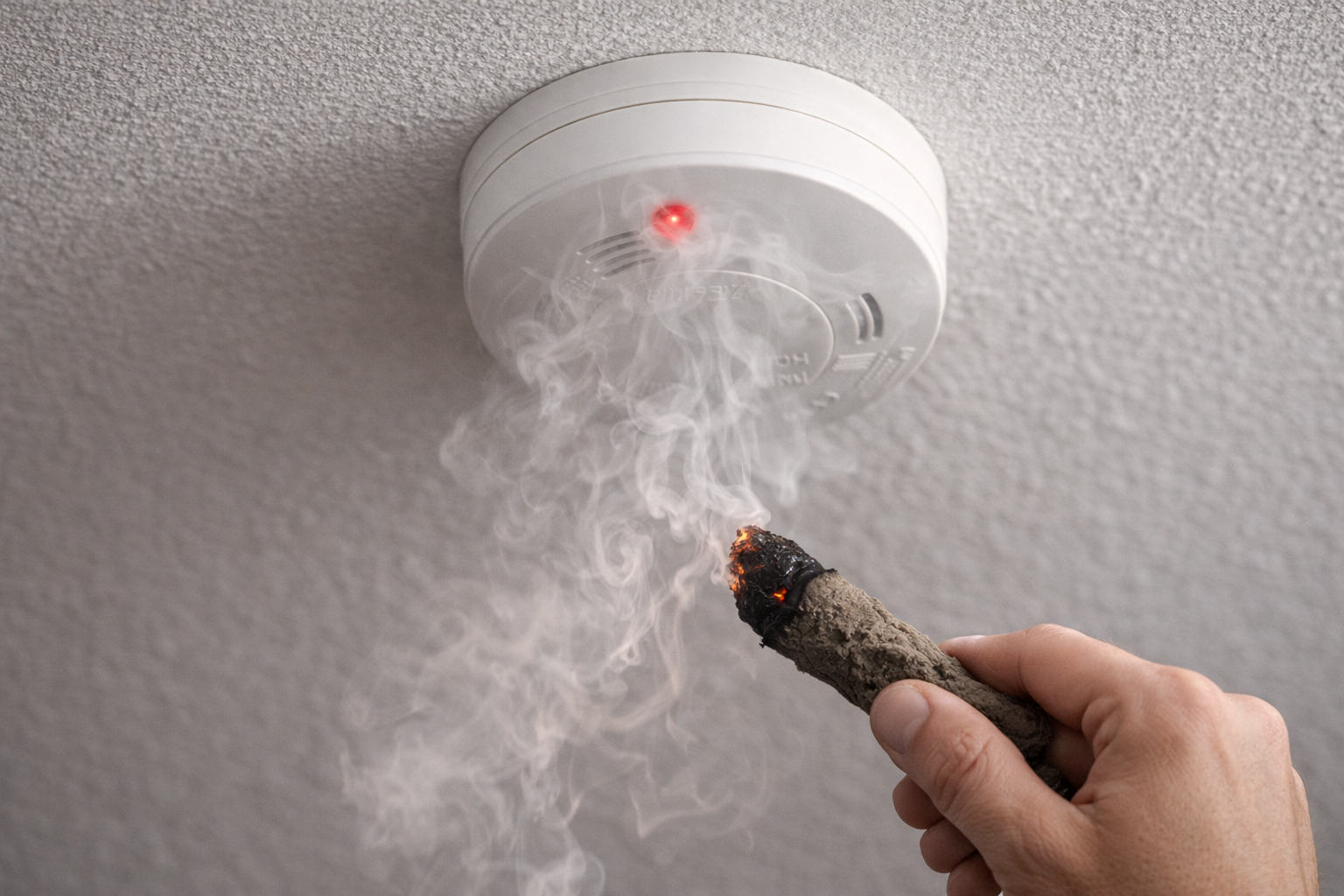
Use a smoke detector tester cup (e.g., Solo 330) to contain aerosol, directing minimal smoke. Spray briefly alarm beeps shortly then hushes. For interconnected, test one at a time, using hush on others. Avoid if sensitive neighbors; opt for professional sensitivity testing, required every two years per NFPA.
How to Test Smoke Detector Without Test Button
Older or basic models lack buttons; how to test smoke detector without test button? Rely on smoke simulation.
- Aerosol Method: As above, spray directly effective for ionization/photoelectric.
- Steam Trick: Boil water, hold kettle near (not touching) steam mimics particles, triggering without residue.
- Candle/Blowout: Safely blow out a candle below; rising smoke tests response, but control to avoid soot.
Replace if no alarm after multiple tries units over 10 years old fail often.
Top Smoke Detector Tester Products
Smoke detector tester tools make testing efficient. Here’s a rundown:
- CRC Smoke Test ($10-15): Aerosol can; quick, no-residue spray.
- Solo 365 ($200+): Professional kit with wand for high ceilings; reusable cartridges.
- Testifire 2001 ($500+): Multi-sensor (smoke/heat/CO); ideal for pros.
- SmokeSabre ($20): Telescoping wand prevents over-spray.
Choose based on frequency homeowners need basics; landlords pros.
Comparative Table of Testing Methods
| Method | Pros | Cons | Best For | Frequency |
|---|---|---|---|---|
| Test Button | Quick, no tools | Doesn’t check sensor | Monthly checks | Monthly |
| Aerosol Smoke | Simulates real smoke | Cost of cans | Annual full test | Annually |
| Steam from Kettle | Free, at-home | Less consistent | Without button | As needed |
| Professional Tester | Precise, multi-function | Expensive | Commercial | Biennial sensitivity |
This table aids in choosing based on needs.
Common Mistakes and Troubleshooting
Avoid these: Testing too infrequently NFPA says monthly buttons, annual smoke. Ignoring chirps (low battery) or not cleaning dust quarterly. If no sound, check batteries, power, or replace unit.
False alarms? Clean vents; relocate from kitchens. For smart detectors, app diagnostics help.
FAQ
Can Smoke Detectors Be Tested?
Yes, via test buttons monthly and smoke annually to ensure full functionality.
How to Know If a Smoke Detector Detects Smoke?
Perform a smoke test with aerosol; if it alarms within seconds, it detects properly.
What is the Best Way to Check a Smoke Detector?
Monthly test button; annual aerosol smoke for comprehensive verification.
How Should Smoke Alarms Be Tested?
Press test button for 5-10 seconds; use smoke for sensor checks.
How to Test a Smoke Detector with Smoke Without Triggering?
Use contained testers to minimize smoke; hush button silences quickly.
How to Test a Smoke Detector with Smoke at Home?
Gather aerosol, spray vents briefly, confirm alarm, then clear air.
What If My Smoke Detector Doesn’t Respond to Smoke?
Replace immediately; could indicate sensor failure.
Conclusion
Mastering how to test a smoke detector with smoke safeguards your home, blending simple button checks with realistic simulations using tools like smoke detector tester aerosols. From types and precautions to troubleshooting, regular testing monthly and annually ensures reliability. Don’t overlook how to test smoke detector without test button via steam or candles for older models. Prioritize safety; a functional detector could save lives.