






Introduction: Returning to the Moon with Artemis II
The NASA Artemis program represents a bold step forward in human space exploration, aiming to return astronauts to the lunar surface and establish a sustainable presence there for the first time since the Apollo era. At the heart of this endeavor is Artemis II, the first crewed mission in the program, set to send four astronauts on a historic flyby around the Moon. This mission isn’t just about revisiting our celestial neighbor; it’s crucial for testing the systems that will enable future landings, scientific discoveries, and even journeys to Mars. With the nasa artemis ii launch pad at Kennedy Space Center’s Launch Complex 39B now hosting the massive Space Launch System (SLS) rocket, excitement is building as we approach the nasa artemis launch date in early February 2026. Understanding the nasa artemis ii launch pad facts and mission insights highlights how decades of innovation culminate in this pivotal moment, inspiring a new generation while addressing global challenges like resource utilization and deep-space travel.
The Iconic NASA Artemis II Launch Pad: Kennedy Space Center’s Launch Complex 39B
History and Evolution of LC-39B
Launch Complex 39B (LC-39B) at NASA’s Kennedy Space Center in Florida has been a cornerstone of American spaceflight since the 1960s. Originally built for the Apollo program, it first saw action on May 18, 1969, with the launch of Apollo 10, a dress rehearsal for the Moon landing. Over the years, this nasa artemis ii rocket launchpad hosted 53 Space Shuttle missions until 2006 and played a key role in the Skylab and Apollo-Soyuz programs. After the Shuttle’s retirement, NASA transformed LC-39B into a “clean pad” design, making it versatile for multiple rockets, including the SLS for Artemis.
The pad spans about 344 acres and features a 571-foot-long flame trench lined with over 1.3 million fire-resistant bricks to withstand extreme heat up to 2,200°F from rocket engines. Upgrades since 2014 include a new 1.25 million-gallon liquid hydrogen tank, fiber optic cabling replacing old copper lines, and an emergency egress system for crew safety. These enhancements reduce integration time for the SLS to just 10 days, boosting efficiency for the nasa artemis schedule.
Why LC-39B for Artemis II?
LC-39B was chosen for its proven track record and adaptability. It was the artemis-1 launch pad for the uncrewed Artemis I mission on November 16, 2022, proving its capability for the SLS the most powerful rocket ever built. The pad’s water deluge system releases 400,000 gallons in under 30 seconds to suppress sound and flames, protecting the vehicle during liftoff. Lightning protection towers reach 600 feet, safeguarding against Florida’s stormy weather. As the nasa artemis ii launch pad, it symbolizes continuity from Apollo to Artemis, blending heritage with cutting-edge tech.
Artemis II Mission: Objectives and Significance
Why Is NASA Doing Artemis 2?
Artemis II is a critical test flight to validate the SLS rocket and Orion spacecraft with humans aboard, ensuring they can safely operate in deep space. Unlike robotic missions, this crewed voyage will assess life support systems, navigation, and radiation protection in real-time. The mission builds on Artemis I’s success, paving the way for Artemis III’s lunar landing and long-term exploration. By demonstrating these capabilities, NASA aims to establish a sustainable lunar presence, extract resources like water ice, and prepare for Mars missions.
Why Won’t Artemis II Land on the Moon?
Artemis II is designed as a flyby, not a landing, to prioritize safety and system testing. The crew will orbit the Moon at about 4,000 miles altitude, then venture 6,400 miles beyond its far side farther than any humans have gone before returning via a free-return trajectory using Earth-Moon gravity. Landing requires additional elements like a human landing system, which will debut in Artemis III. This step-by-step approach minimizes risks while gathering data on Orion’s performance.
The 10-day mission includes a targeting demonstration near Earth and evaluations during the outbound and return phases. Splashdown will occur in the Pacific Ocean off San Diego, testing reentry at Mach 32 speeds.
NASA Reveals Historic Crew for 2024 Artemis Moon Voyage: Meet the Astronauts
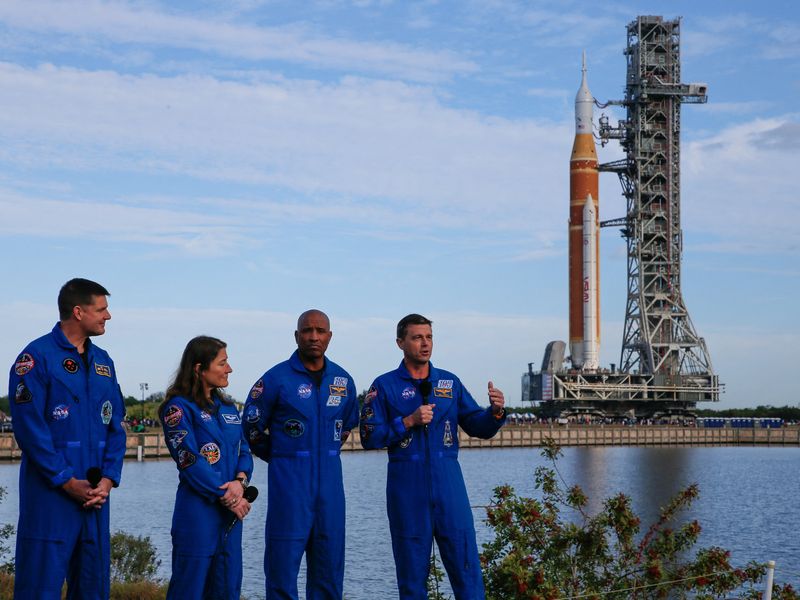
Announced in April 2023 (though the voyage is now in 2026 due to delays), the Artemis II crew marks milestones: the first woman, first person of color, and first non-American on a lunar mission. How many astronauts will be on Artemis 2? Four, each bringing unique expertise.
- Commander Reid Wiseman (NASA): A Navy test pilot with 165 days on the ISS, Wiseman leads the mission.
- Pilot Victor Glover (NASA): The first Black astronaut on a lunar mission, Glover piloted Crew Dragon to the ISS.
- Mission Specialist Christina Koch (NASA): Holder of the longest single spaceflight by a woman (328 days), Koch becomes the first woman on a lunar voyage.
- Mission Specialist Jeremy Hansen (CSA): A Canadian fighter pilot, Hansen represents international collaboration.
This diverse team embodies the Artemis Generation, fostering global partnerships.
NASA Artemis Launch Date: Countdown to Liftoff
Artemis 2 Launch Date and Time
The artemis 2 launch date is no earlier than February 6, 2026, at 9:41 PM EST (February 7, 2:41 AM UTC). For UK viewers, that’s artemis 2 launch time uk at 2:41 AM GMT on February 7. The primary window is February 5-11, with backups in March 6-11 and April 1-6. As of January 19, 2026, the rocket arrived at the pad on January 17 after a 12-hour rollout. A wet dress rehearsal on February 2 will confirm readiness.
The artemis 2 launch date countdown focuses on final tests, influenced by factors like Crew-12 mission timing. The nasa artemis ii launch pad launch date aligns with lunar positions for optimal trajectory.
Broader NASA Artemis Schedule
Artemis II fits into a phased plan: Artemis III (mid-2027) for the first landing near the South Pole, Artemis IV (2028) for the Lunar Gateway station, and annual missions thereafter. Delays from 2024 targets reflect thorough safety checks.
From Launch of NASA’s Artemis I to Artemis II: Lessons Learned
Artemis I, launched on artemis 16 november 2022 from the artemis-1 launch pad (LC-39B), was a 25-day uncrewed test covering 1.4 million miles. It validated SLS and Orion, with reentry at 24,581 mph. Issues like heat shield erosion led to Artemis II delays, but data informed upgrades. This progression ensures Artemis II’s success.
NASA Artemis Jobs: Careers in Lunar Exploration
NASA Artemis jobs span engineering, science, and operations, with opportunities at centers like Kennedy. Roles include test conductors, radiation scientists, and program managers. Internships and student challenges like Student Launch offer entry points. Search USAJobs for openings, or join “Send Your Name with Artemis II” for symbolic involvement. These nasa artemis jobs drive innovation, from habitat design to robotics.
Table: NASA Artemis Program Timeline
| Mission | Launch Date | Key Objectives | Launch Pad |
|---|---|---|---|
| Artemis I | November 16, 2022 | Uncrewed SLS/Orion test around Moon | LC-39B |
| Artemis II | NET February 6, 2026 | Crewed flyby, system validation | LC-39B |
| Artemis III | Mid-2027 | First human landing at South Pole | LC-39B |
| Artemis IV | Late 2028 | Lunar Gateway docking, station debut | LC-39B |
| Artemis V | Early 2030 | Advanced exploration, rover integration | LC-39B |
This table shows the program’s progression, emphasizing LC-39B’s role.
NASA Artemis II Launch Pad Live: How to Follow the Action
For nasa artemis ii launch pad live updates, tune into NASA’s YouTube or website for rollout footage and countdown coverage. The January 17 rollout was streamed, showing the 322-foot SLS on its 4-mile journey. Kennedy Space Center Visitor Complex offers viewing packages. Apps like Space Launch Schedule provide artemis 2 launch date countdown timers.
FAQ: Common Questions About NASA Artemis II
What Launch Pad Will Artemis Use?
Artemis missions, including Artemis II, use Launch Complex 39B at Kennedy Space Center, a historic site upgraded for SLS.
Why Won’t Artemis II Land on the Moon?
It’s a test flyby to verify spacecraft systems; landings start with Artemis III.
Why Is NASA Doing Artemis 2?
To test SLS and Orion with crew, ensuring safety for future lunar landings and Mars prep.
How Many Astronauts Will Be on Artemis 2?
Four: Three from NASA and one from the Canadian Space Agency.
What Is the Artemis 2 Launch Date and Time?
No earlier than February 6, 2026, at 9:41 PM EST (2:41 AM GMT February 7).
How Can I Watch NASA Artemis II Launch Pad Live?
Via NASA’s live streams on YouTube or the official site; visitor complex for in-person views.
Are There NASA Artemis Jobs Available?
Yes, from engineering to internships; check USAJobs or NASA’s STEM Gateway.
Conclusion: A Giant Leap Toward the Future
Artemis II, launching from the nasa artemis ii launch pad at LC-39B, marks a new chapter in exploration with its historic crew, rigorous testing, and ambitious schedule.